7 Mistakes Homeowners Make Before Hiring a Contractor
Every year, thousands of homeowners dive into remodeling projects with excitement — only to come out the other side frustrated, over budget, and wondering what went wrong.
The truth? Most renovation nightmares don't happen because of bad contractors. They happen because homeowners didn't know what to look for before signing a contract.
Here are the 7 most common mistakes we see — and how to avoid every single one.
1. Shopping Only on Price
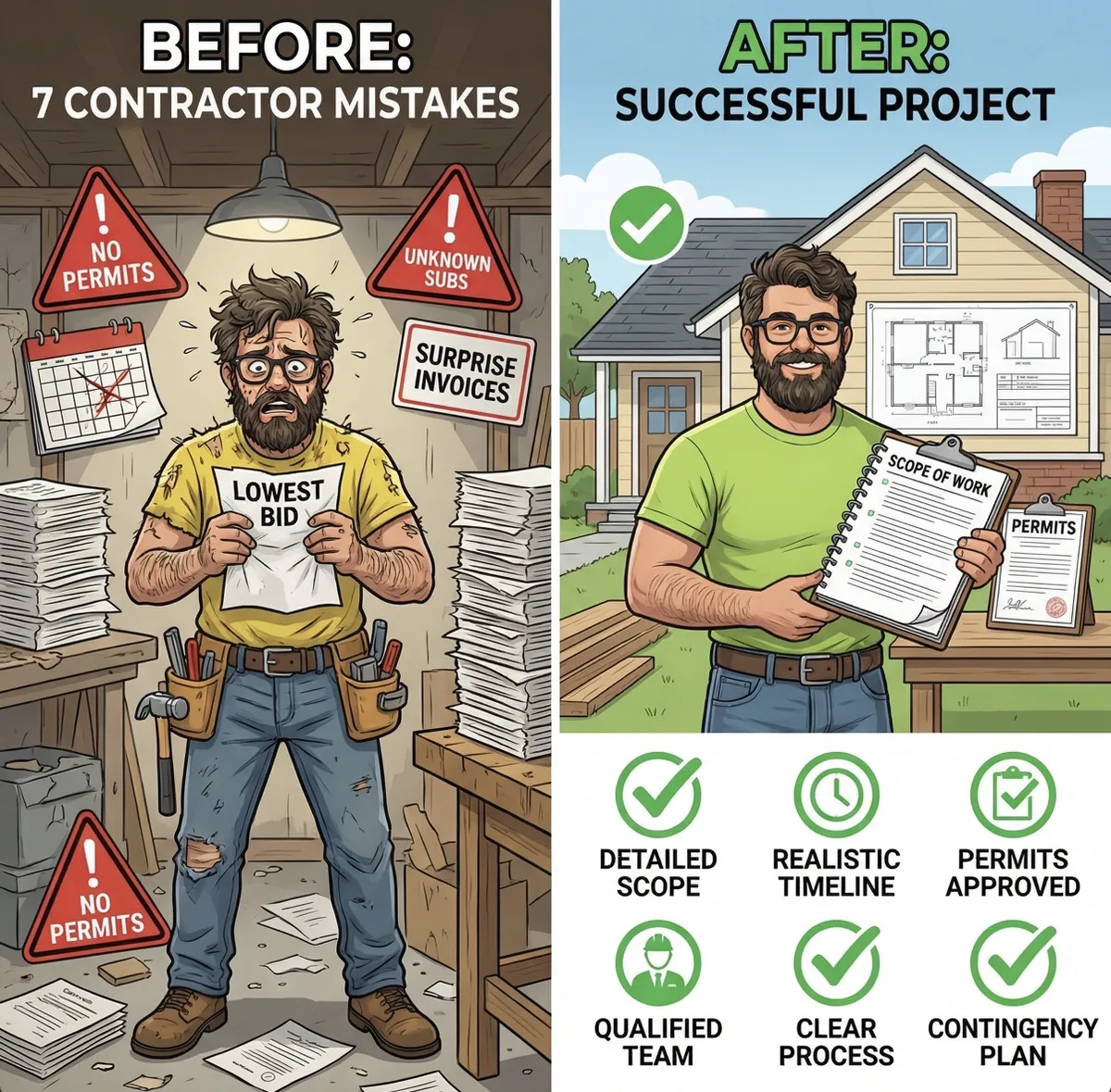
We get it. Budgets matter. But the lowest bid rarely includes the full scope of work. What it usually includes is the least amount of responsibility.
A rock-bottom price often means:
- Cheaper materials that won't last
- Corners cut on labor and technique
- Missing line items that become expensive "extras" later
- No warranty or follow-up support
The fix: Compare bids line-by-line, not just bottom-line. Ask what's included — and more importantly, what's not included. A slightly higher bid with a detailed scope will almost always save you money in the long run.
2. Not Demanding a Detailed Scope of Work
If the scope of work is vague on paper, it will be expensive in reality.
A proper scope of work should include:
- Specific materials to be used (brand, model, color)
- Exact locations and dimensions of work
- Clear start and completion dates
- Payment schedule tied to milestones
- What happens when something goes wrong
The fix: Never sign a contract that says things like "remodel bathroom" or "install flooring." Those aren't scopes — they're guesses. Demand specifics. If a contractor can't write it down, they can't deliver it.
3. Ignoring Timeline Realism
"Yeah, we can start next week" sounds great. But it's not a schedule — it's a red flag.
Good contractors are busy. If someone can start immediately, it might mean:
- They don't have consistent work (why not?)
- They're juggling too many jobs
- They haven't thought through the logistics of your project
The fix: Ask for a realistic timeline with milestones. A professional contractor will walk you through the phases — demo, rough-in, inspections, finish work — and give you honest dates. "We can start in 3 weeks" is often a much better answer than "we can start tomorrow."
4. Skipping the Permit Conversation
If permits aren't discussed early, you're already behind.
Permits exist to protect you — the homeowner. They ensure:
- Work meets building code standards
- Inspections verify structural and electrical safety
- Your home's value isn't jeopardized by unpermitted work
- Your insurance actually covers the renovation
The fix: Ask your contractor directly: "Does this project require permits, and who pulls them?" If they dodge the question or say "we don't need permits," walk away. Unpermitted work can cost you thousands when you sell your home — or worse, put your family at risk.
5. Not Asking Who's Actually Doing the Work
Are you hiring a company… or a guy with subs and a phone?
There's nothing wrong with using subcontractors — most general contractors do. But you deserve to know:
- Who will be on-site daily?
- Are the workers licensed and insured?
- Who supervises quality control?
- Who do you call when there's a problem?
The fix: Ask the contractor: "Will your crew be doing the work, or are you subbing it out?" Either answer is fine — but you need to know who's responsible for the outcome. A contractor who hides behind subs isn't managing your project. They're just brokering it.
6. No Written Change Order Process
Renovations change. That's normal. What's not normal is getting surprise invoices because there's no system for handling changes.
Without a change order process:
- Verbal agreements become he-said-she-said disputes
- Costs spiral with no documentation
- Timelines shift with no accountability
- Trust breaks down fast
The fix: Your contract should include a clear change order process. Any change to scope, materials, or timeline should be documented in writing, signed by both parties, with the cost and timeline impact spelled out before the work happens. No exceptions.
7. Not Discussing Contingencies
Every remodel has unknowns. Open a wall and you might find mold, outdated wiring, or plumbing that doesn't meet code. Mature contractors plan for this. Amateurs hope it won't happen.
The fix: Build a contingency budget of 10-15% into your project. Discuss with your contractor upfront: "What happens if we find something unexpected?" Their answer will tell you everything about how they run projects. A great contractor will say, "Here's our process for handling surprises." A bad one will say, "Don't worry, that won't happen."
The Bottom Line
Hiring a contractor is one of the biggest financial decisions a homeowner can make. The difference between a dream renovation and a nightmare often comes down to preparation — not luck.
Before you sign anything, make sure you've:
- Compared detailed scopes, not just prices
- Verified licenses, insurance, and references
- Discussed permits, timelines, and change orders
- Asked the hard questions about who does the work
- Built contingency into your budget
At Triple Check Construction, we believe every homeowner deserves a contractor who communicates clearly, works with integrity, and delivers on their promises. That's the triple-check difference.
Frequently Asked Questions
How do I know if a contractor is licensed?
Ask for their license number and verify it with your state's licensing board. In Kansas, you can check with the Construction Industries Board. A legitimate contractor will have no problem providing this information.
What should a contractor's insurance cover?
At minimum, your contractor should carry general liability insurance and workers' compensation. Ask for a certificate of insurance and verify it's current. This protects you if someone gets injured on your property or if work causes damage.
How many bids should I get?
Three bids is the standard recommendation. This gives you enough data to compare pricing, scope, and communication style without overwhelming yourself. Remember: you're not just comparing numbers — you're comparing professionalism.
What's a reasonable deposit to pay upfront?
Typically 10-25% is normal for a deposit, depending on the project size. Be wary of contractors who ask for 50% or more upfront. Payment should be tied to milestones, not front-loaded.
Can I be my own general contractor?
You can, but it's rarely worth the savings unless you have construction experience. Managing permits, scheduling subs, ordering materials, and handling inspections is a full-time job. Most homeowners who try it end up spending more — in both time and money.
Need Professional Help?
Our experienced team is ready to assist with your construction project. Contact us today for a free consultation.
Get a Free Quote